The Strand Theatre Fire
The High Street Fire of 1927
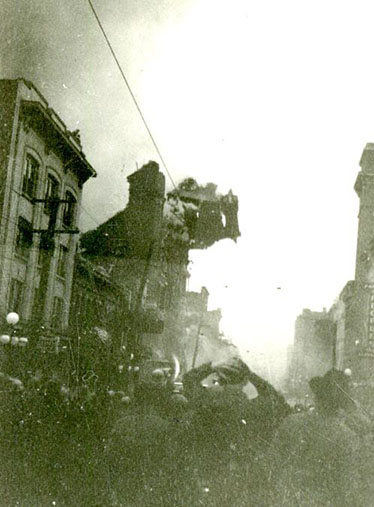
On this day in Morgantown history, a devastating fire destroyed an entire block of businesses and apartments along High Street. The fire grew so intense that the seven‑story Strand Theatre collapsed onto the street, crushing neighboring buildings in the process. Fire departments from as far away as Fairmont and Uniontown responded to the alarm.
The blaze caused more than $2 million in damage (in 1927 dollars) and destroyed the block between Fayette Street and Wall Street. Among the losses were 50 pianos, though several early “talking machines” were remarkably pulled from the flames. The heat was so extreme that windows melted across the street, and ammunition stored in a hardware store ignited as the building burned.
Despite the scale and intensity of the fire, no lives were lost—a testament to the bravery of the firefighters who battled the blaze. The Charleston Daily Mail evening edition on April 14, 1927, reported:
“Four firemen were trapped in the basement of the Orr Brothers department store where the flames were first found but were rescued by volunteers. Two of them were overcome but upon being revived joined their mates. Later they were seriously burned while fighting the flames from the top of the city hall. A swirl of fire caught them as they were playing a stream of water on the Strand Theater. They were taken to the hospital.”
Why the Fire Still Matters
This fire remains especially significant to Morgantown Utility Board (MUB) history because it underscored the critical importance of reliable fire protection and water infrastructure.
Just three years earlier, in 1924, High Street had been completely excavated (see photos of the work) to install new water and sewer lines. Those upgrades proved invaluable during the fire. Despite the extraordinary demand placed on the system, water pressure held steady. As The New Dominion reported on April 15, 1927:
“Despite the heavy demand on the water lines, with more than a dozen streams pulling at one time, the pressure of the water was generally good and none of the pumpers were brought into play.”
Without these improvements, firefighters may not have had sufficient water pressure to combat the blaze.
A Lasting Impact
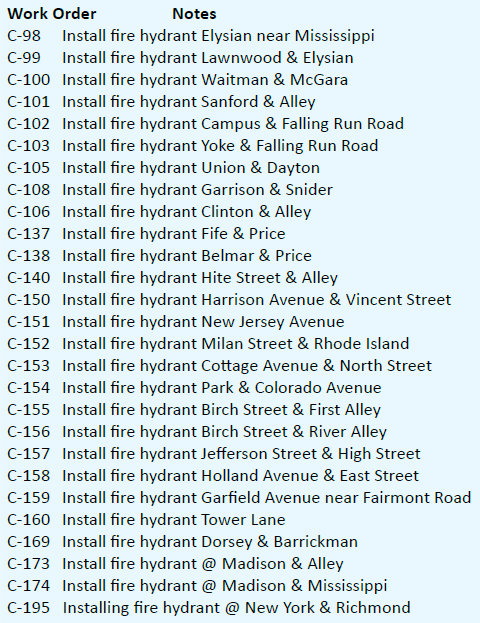
In the aftermath of the fire, Morgantown accelerated its commitment to fire preparedness. Water Department records show a sharp increase in fire hydrant installations beginning in 1928, reflecting a citywide effort to strengthen emergency response capabilities.
📷 View historic photographs of the fire through the West Virginia & Regional History Center.
🎥 Watch a video on the fire produced by the Morgantown Public Library and the Aull Center.
PHOTOS:
Below left: The moment the Strand Theatre collapsed onto High Street.
Below Right: A list of work orders from 1928 showing fire hydrant installations throughout Morgantown.